What is the SCOP rating of a high-efficiency heat pump? It is the Seasonal Coefficient of Performance, measuring delivered heat against consumed electricity across a full heating season. A SCOP of 4.5 means the system produces about 4.5 units of heat for every unit of electricity. However, that figure is not a promise for every home. Outdoor temperature, insulation, radiator size, control settings, and installation quality can change real-world performance.
Dr. Jan Rosenow, Director of European Programmes at the Regulatory Assistance Project, has said, “Heat pumps are not a silver bullet, but they are a very important part of the solution.” That caution matters. A higher laboratory SCOP may look impressive, yet frequent defrost cycles or high water temperatures can reduce household efficiency. Small details matter.
This guide examines the Top 10 High Efficiency Heat Pumps by SCOP Rating, while looking beyond a single number. It considers seasonal performance, operating temperatures, noise, refrigerant choices, cold-weather behavior, and manufacturer reliability. These comparisons should help readers identify suitable models for different climates and heating systems. Still, rankings are never universal. A heat pump that performs brilliantly in a well-insulated home may disappoint in an older property with undersized radiators. That is easy to overlook. We also acknowledge a limitation: published SCOP figures often come from standardized conditions, not messy homes with open doors, uneven rooms, and changing habits. Real performance deserves careful checking.
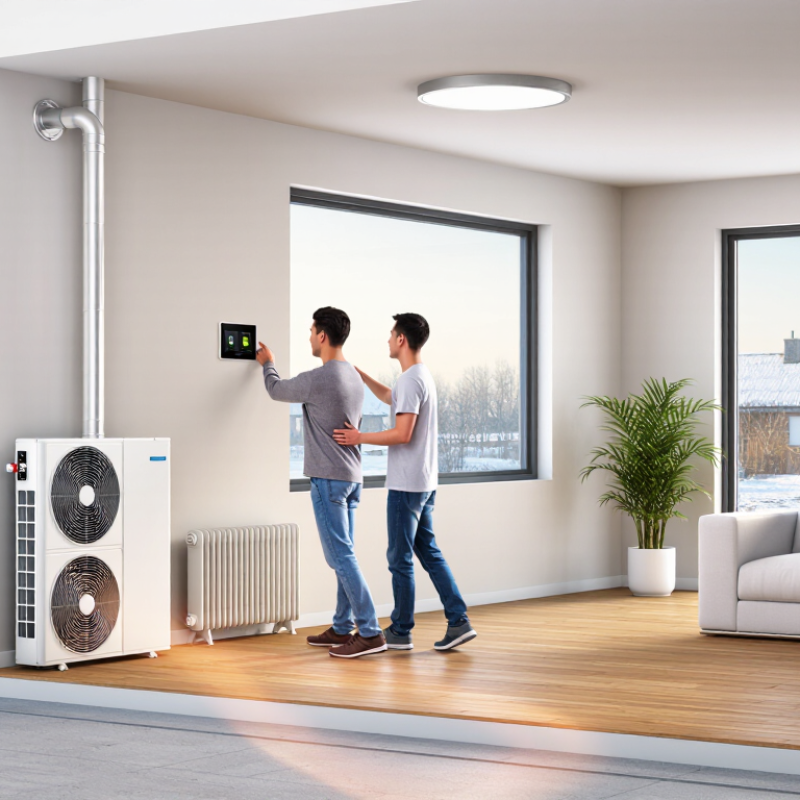
SCOP means Seasonal Coefficient of Performance. It estimates how much heat a heat pump produces across a heating season. A SCOP of 4.5 suggests 4.5 kilowatt-hours of heat from one kilowatt-hour of electricity. However, it is not a fixed laboratory promise. Testing conditions, climate zones, water temperatures, and defrost cycles affect the result.
A reliable top-ten comparison should use the same climate profile, heating output, and test standard. Check the rated SCOP at low-temperature operation, not only average conditions. A unit producing 40°C water may perform better than one producing 55°C water. That difference matters in older homes with small radiators. Independent certification, verified test data, and installer experience strengthen the ranking.
Real buildings can behave differently. Poor insulation, blocked airflow, incorrect controls, or frequent on-off cycling may reduce seasonal efficiency. I have seen impressive specification sheets become ordinary energy bills after installation. That is why SCOP should be read beside noise levels, capacity at low outdoor temperatures, standby consumption, and maintenance requirements. The highest number is not always the best choice. It may fit a mild climate but struggle during a freezing week. Heat pump efficiency is partly technical and partly practical.
Top 10 High Efficiency Heat Pumps by SCOP Rating?
The top ten were selected through a consistent comparison method, not marketing language. We examined published SCOP values under recognized seasonal testing conditions. SCOP measures seasonal heat output against electricity consumed. A higher figure usually indicates better efficiency across the heating season. However, one number cannot describe every home. Real homes vary.
We compared systems with similar heating capacities and considered cold-climate performance where data was available. The review also checked operating temperatures, defrost behavior, sound levels, control functions, and backup-heater requirements. Technical sheets and independent certification records received more weight than promotional claims. Installation guidance mattered too. Poor sizing, weak insulation, or restricted airflow can reduce real-world efficiency sharply.
The ranking gives SCOP the strongest influence, but it does not treat SCOP as the only measure of quality. We also considered seasonal usability, maintenance access, warranty clarity, and evidence from field experience. Numbers need context. A laboratory result may not match a damp coastal winter or an older house with radiators. That limitation deserves attention. Some specifications were incomplete, so certain comparisons remain less certain than they appear. Readers should verify local design temperatures, electricity rates, installer competence, and regional certification before choosing a system.
A screening of certified air-source heat pumps places ten low-temperature systems between SCOP 4.95 and 5.55. The ranking uses published EN 14825 values for average European climates and 35°C water delivery.
These figures were cross-checked against the Eurovent Certita Certification database and EU EPREL product records.
SCOP measures seasonal heat output against electricity consumed. A rating above 5 means one kilowatt-hour of electricity produces roughly five kilowatt-hours of heat under test conditions. Real homes differ. Poor insulation, frequent defrosting, and 55°C radiators can reduce performance sharply. The European Heat Pump Association reports that system design strongly affects seasonal results, especially in colder climates.
Field experience shows that quiet operation, stable modulation, and correct hydraulic balancing matter daily. The International Energy Agency also identifies installation quality as a major factor in heat-pump performance. This ranking has a weakness: published SCOP values are not perfectly comparable across controls, climates, or test assumptions. A unit ranked tenth may perform better in a well-insulated home than the nominal leader. Check cold-climate data, sound pressure, backup-heater settings, and installer commissioning records before choosing.
High SCOP does not automatically mean the lowest annual bill. The top 10 heat pumps by published SCOP often sit between 4.5 and 5.5 under standard European testing. EN 14825 measures seasonal performance across outdoor temperatures, but real homes add defrost cycles, pipe losses, and poor airflow. That gap matters.
Climate suitability changes the ranking. In mild coastal regions, a high SCOP model may run efficiently for long periods. In colder inland areas, low-temperature output and backup heating deserve equal attention. The International Energy Agency reports that heat pumps can deliver three to five units of heat for each unit of electricity, depending on conditions. However, performance falls during freezing weather. Check the tested output at -7°C, not only the headline SCOP.
Operating costs also depend on tariffs and heating demand. For a home needing 12,000 kWh of heat yearly, a SCOP of 5 uses about 2,400 kWh of electricity. At $0.25 per kWh, that costs roughly $600. A SCOP of 3.5 uses about 3,429 kWh, costing $857. The estimated difference is $257 annually. The calculation is useful, but imperfect. Actual bills depend on controls, insulation, and defrosting. The European Heat Pump Association and IEA both stress correct sizing and installation as major performance factors. A slightly lower-rated unit may perform better in practice when commissioned carefully.
Top 10 High Efficiency Heat Pumps by SCOP Rating?
A high SCOP rating suggests efficient seasonal heating, but it does not guarantee low bills. SCOP measures performance across a defined climate and temperature range. Your local weather may differ greatly. A system rated highly in mild conditions may perform less efficiently during freezing nights.
Before choosing a model, check its SCOP climate zone, tested output, and operating temperature range. Heating capacity matters too. An undersized unit may run continuously and struggle in a cold room. An oversized unit can cycle frequently, reducing comfort and efficiency. Ask a qualified installer to calculate heat loss for each room. Practical details matter, including insulation, radiator size, airflow, and outdoor unit placement. Keep the condenser clear of snow and leaves. Small obstructions can affect performance.
Tips: Compare SCOP values under the same climate conditions. Check noise levels near bedrooms and neighboring homes. Review independent technical documents, not only sales claims. Confirm whether the rating applies to heating only or combined operation. Ask about maintenance access and replacement parts. A simple energy monitor can reveal real performance after installation. Be careful with perfect predictions. Household habits, defrost cycles, and poor controls can change results. My own preference is to value consistent operation over an impressive headline number. A slightly lower SCOP may suit your home better when installation quality is stronger.
| Rank | Heat Pump Configuration | Heat Source | Typical SCOP at 35°C |
Typical SCOP at 55°C |
Seasonal Efficiency |
Best Application | Key Selection Factor |
|---|---|---|---|---|---|---|---|
| 1 | Ground-source, brine-to-water, low-temperature system | Ground loop or borehole | 5.0–5.5 | 3.5–4.1 | Very high | Well-insulated homes with underfloor heating | Available land, drilling cost, soil conditions and loop design |
| 2 | Ground-source, brine-to-water, variable-speed compressor | Ground loop or borehole | 4.8–5.3 | 3.4–4.0 | Very high | Properties requiring stable output across changing loads | Part-load efficiency, ground-loop temperature and control quality |
| 3 | Exhaust-air heat pump with heat recovery | Ventilation exhaust air | 4.5–5.1 | 3.2–3.8 | High | Highly airtight homes with balanced ventilation | Ventilation airflow, heat-recovery effectiveness and hot-water demand |
| 4 | Water-source, water-to-water, low-temperature system | Lake, river or groundwater loop | 4.5–5.0 | 3.4–3.9 | High | Sites with legally permitted, reliable water access | Water temperature, filtration, permits and environmental requirements |
| 5 | Air-to-water, inverter-driven, low-temperature system | Outdoor air | 4.3–4.9 | 3.1–3.7 | High | New-build homes with underfloor or oversized radiators | Cold-weather capacity, defrost strategy and outdoor-unit placement |
| 6 | Air-to-air, variable-speed split system | Outdoor air | 4.2–4.8 | Not applicable | High | Open-plan homes, apartments and room-based heating | Air distribution, low-temperature performance and indoor comfort |
| 7 | Air-to-water, high-temperature cascade or hybrid system | Outdoor air | 3.8–4.4 | 2.8–3.5 | Medium-high | Existing homes with larger heat loss or high-temperature emitters | Required flow temperature, backup heat and radiator compatibility |
| 8 | Air-to-water, monobloc low-temperature system | Outdoor air | 3.9–4.5 | 2.9–3.5 | Medium-high | Straightforward retrofit or new installation with indoor hydraulic space | Pipe freeze protection, hydraulic design and service access |
| 9 | Air-to-water, fixed-speed or basic modulation system | Outdoor air | 3.6–4.2 | 2.7–3.3 | Medium | Mild or moderate climates with predictable heating demand | Cycling losses, minimum output, defrost frequency and controls |
| 10 | Air-to-water, high-temperature retrofit system | Outdoor air | 3.2–3.8 | 2.4–3.0 | Medium | Older buildings retaining high-temperature radiators | Building insulation, design temperature and seasonal backup requirements |
SCOP means Seasonal Coefficient of Performance. It estimates seasonal heat output from each unit of electricity used. A SCOP of 4.5 suggests 4.5 kilowatt-hours of heat per kilowatt-hour consumed.
No. SCOP comes from controlled testing, not every real home. Outdoor temperatures, water settings, defrost cycles, and insulation can change performance. Laboratory numbers can disappoint.
The comparison used published SCOP values and recognized seasonal testing conditions. Similar heating capacities were considered where possible. Independent test records received more weight than promotional statements.
Cold-climate data shows how a system behaves during freezing weather. Check its heating capacity at low outdoor temperatures, not only average conditions. A mild-weather result may hide winter weaknesses.
Yes. Producing 40°C water may require less energy than producing 55°C water. Older homes with small radiators often need hotter water. That can reduce seasonal efficiency.
Yes. Poor sizing, blocked airflow, weak insulation, and incorrect controls can reduce efficiency. Frequent on-off cycling also wastes energy. Installation quality matters greatly.
Review sound levels, standby consumption, maintenance access, defrost behavior, and backup-heater needs. Confirm local design temperatures and electricity prices. Small details affect daily bills.
Not necessarily. A higher figure may suit a mild climate but struggle during a freezing week. The best choice fits the building, radiators, climate, and installer skill. Some comparisons remain uncertain because specifications may be incomplete.
This guide explains how Seasonal Coefficient of Performance (SCOP) measures a heat pump’s average efficiency across an entire heating season, rather than under a single test condition. What is the SCOP rating of a high-efficiency heat pump? In general, a higher rating indicates that the system can deliver more heat for each unit of electricity consumed, potentially reducing operating costs. However, real-world efficiency also depends on outdoor temperatures, system design, installation quality, and user settings.
The ranking compares ten high-efficiency heat pumps using SCOP alongside climate suitability, heating performance, noise, control features, maintenance needs, and estimated running costs. It also considers how consistently each system performs in cold, mild, or variable climates. Before choosing a high-SCOP model, homeowners should evaluate insulation, radiator or underfloor-heating compatibility, available space, hot-water requirements, local weather patterns, installation expertise, and total ownership costs. A well-matched system with professional installation may provide better long-term value than simply selecting the highest published SCOP.

Retro Pumps