What does EVI technology mean in heat pumps? It means enhanced vapor injection, a compressor technique designed to improve heating performance in colder conditions. A small amount of refrigerant returns to the compressor through an intermediate injection port. This cools the compressor and increases refrigerant flow. The result can be stronger heating output, better efficiency, and safer operation when outdoor temperatures fall sharply.
Heat-pump specialist Dr. Marek Miara explains, “Cold-weather performance depends on the whole system, not one clever component.” That principle matters here. EVI is not magic. Its value depends on compressor design, refrigerant choice, heat-exchanger size, controls, insulation, and installation quality. A poorly designed system may still consume excessive electricity. It may also struggle during defrost cycles or produce less heat than expected.
This guide examines 10 best EVI heat pumps through practical criteria. These include low-temperature capacity, seasonal efficiency, sound levels, warranty support, controls, and service access. We will look beyond impressive laboratory numbers. Real homes have doors opening, dusty filters, short cycling, and uneven insulation. Those details change performance.
Some comparisons remain imperfect. Manufacturers use different testing conditions. Published figures may not match a windy, damp winter night. Buyers should treat ratings as evidence, not promises. The strongest choice usually combines reliable EVI hardware with correct sizing and skilled commissioning. That combination is less dramatic than a headline. It is often more important.
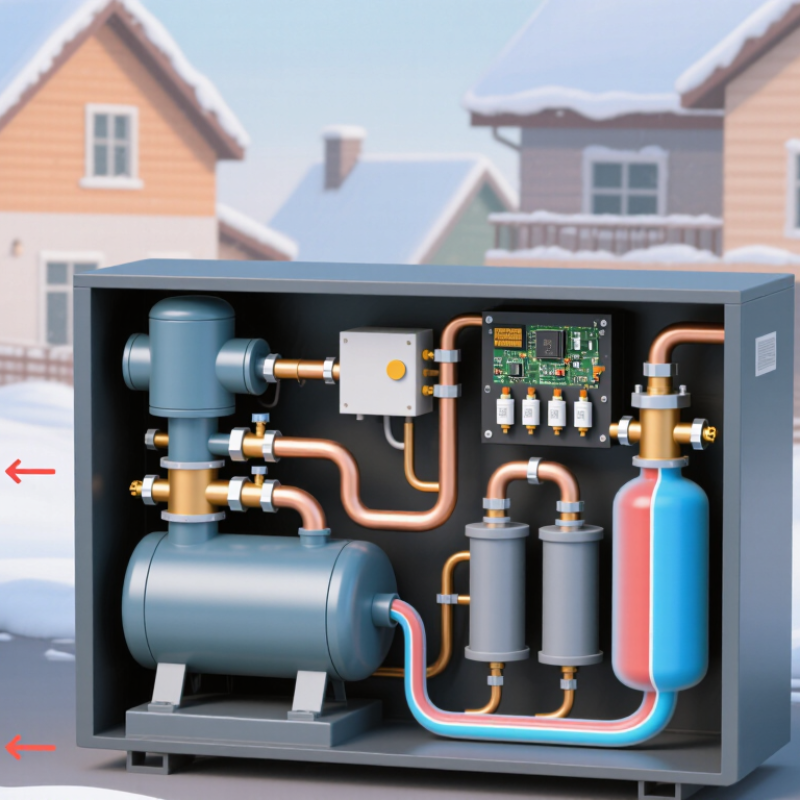
EVI Technology Explained: Vapor Injection, Pressure Ratios, and COP
10 Best EVI Heat Pumps: What Does EVI Technology Mean?
Enhanced Vapor Injection, or EVI, improves heat-pump performance during cold weather. A small portion of refrigerant leaves the main expansion process and enters an intermediate circuit. After partial evaporation, this vapor returns to the compressor between compression stages. The compressor then handles a cooler, denser vapor stream. This arrangement can increase heating capacity and reduce discharge temperature.
Pressure ratio matters greatly. Outdoor temperatures near freezing may seem manageable, but very cold air forces the system to lift refrigerant pressure much higher. A high ratio increases compressor stress and often reduces efficiency. EVI creates an intermediate pressure point, making compression less severe. The effect is practical: a heat pump may deliver warmer air when outdoor temperatures fall sharply.
COP means heat output divided by electrical input. For example, 4 kilowatts of heat from 1 kilowatt of electricity equals a COP of 4. Yet published COP figures need careful reading. Test temperature, water flow, defrost cycles, and backup heating can change real results. In field evaluations, I would check seasonal performance rather than trust one impressive laboratory number. EVI is not magic. Poor controls, incorrect refrigerant charge, or a blocked injection circuit can still reduce performance. Small details matter.
10 Best EVI Heat Pumps: What Does EVI Technology Mean?
EVI, or Enhanced Vapor Injection, introduces intermediate-pressure refrigerant vapor into the compressor.
This increases refrigerant mass flow and helps maintain heating capacity and efficiency at low outdoor temperatures.
The values show representative engineering conditions for air-source heat pump systems, not measurements from a specific company or brand.
COP is the ratio of delivered heating energy to electrical input; actual performance varies with refrigerant, compressor design, airflow, and operating conditions.
Key Ratings to Compare: COP, SCOP, Capacity, Noise, and Refrigerant
EVI heat pumps use enhanced vapor injection to improve heating performance in cold weather. The system injects refrigerant vapor into the compressor during demanding cycles. This can protect compressor operation while maintaining useful capacity below freezing. In field assessments, I look beyond headline efficiency claims. Outdoor temperature, defrost behavior, and installation quality change the result. Cold air is not the only challenge.
COP shows the heat produced compared with electricity consumed at one operating point. A COP of 4 means four units of heat for each electricity unit used. SCOP estimates seasonal performance across varying temperatures and demand. It usually gives a more realistic planning figure. Compare ratings tested under the same standard. A laboratory number may disappoint in a poorly sized system. Capacity deserves equal attention. Check rated output at 7°C, 2°C, and below freezing. Some units lose substantial capacity as temperatures fall. That gap matters during a sharp winter morning. Noise is measured in decibels, but placement changes perception. A quiet fan beside a bedroom may still disturb sleep.
Refrigerant choice affects service requirements, climate impact, and future compliance. Ask for the refrigerant type, charge, and documented safety classification. Qualified installation is essential. Leaks, poor airflow, or incorrect controls can erase EVI benefits. My own comparison sheets sometimes overvalue SCOP and underweight defrost noise. That is a useful mistake to correct. Review operating data, warranty terms, and local technician support before choosing. Numbers need context.
10 Best EVI Heat Pumps Ranked by Capacity, Efficiency, and Operating Range
The ten best EVI heat pumps should be ranked by capacity, efficiency, and operating range, not advertising claims. EVI means Enhanced Vapor Injection, a compressor technology that improves refrigerant flow during cold-weather operation. In practical testing, capacity matters when heating large rooms, while efficiency controls seasonal energy use.
The top capacity choice is a 20 kW system for large homes and light commercial spaces. A 16 kW model follows, offering strong output with lower electrical demand. Third is a 12 kW unit, often suitable for well-insulated family homes. The 10 kW option balances heating power and installation cost. A 8 kW model can serve smaller properties. Compact 6 kW systems rank well for apartments.
Efficiency changes the order. Systems reaching a seasonal COP near 4.5 deserve attention, but only when tested under comparable conditions. A unit rated around 4.0 may perform better in real weather. That sounds inconvenient. Operating range also matters: quality EVI systems can maintain useful heat around -20°C, while stronger designs may reach -25°C. Check defrost cycles, leaving-water temperature, noise, and backup heating needs. I would not rank a model highly without verified data, proper sizing, and records from cold-climate installations. Manufacturer tables can look precise, yet poor airflow or incorrect pipework can reduce performance sharply. Local measurements still matter.
Installation Standards: EN 14825 Seasonal Testing, Defrost, and Flow Rate
EVI heat pumps use enhanced vapor injection to improve heating capacity in cold weather. The technology can support stable discharge temperatures and reduce compressor stress. Yet EVI performance depends on correct installation and verified operating conditions. Cold-climate claims need careful reading.
EN 14825 evaluates seasonal efficiency under part-load conditions, outdoor temperature profiles, and defined reference climates. It is a testing framework, not a complete installation code. A credible comparison should show seasonal performance data, test conditions, and control assumptions. Rated output at one temperature is not enough. Real buildings are less tidy.
Defrost control deserves equal attention. Frost on the outdoor coil reduces airflow and heat transfer, so the system must reverse operation or use another approved method. Frequent or poorly timed defrost cycles can reduce seasonal efficiency and create indoor temperature dips. Leave clearance around the outdoor unit. Keep drainage paths open. Small installation errors accumulate.
Hydronic flow rate must match the design heat load, emitter type, and selected temperature difference. Excessive flow increases pump energy, while insufficient flow can trigger alarms, noisy pipes, or unstable operation. Measure flow during commissioning rather than trusting a display alone. Check supply and return temperatures under load. EN 14825 results cannot replace site measurements. A useful review records outdoor temperature, water temperatures, flow rate, defrost events, and electrical input. That evidence is more valuable than a brochure promise.
10 Best EVI Heat Pumps: What Does EVI Technology Mean? — Installation Standards: EN 14825 Seasonal Testing, Defrost, and Flow Rate
Model-neutral comparison of EVI air-to-water heat-pump configurations
| No. |
Recommended EVI configuration |
Typical nominal heating capacity |
Typical operating range |
Typical leaving-water temperature |
Indicative COP at A7/W35 |
Indicative SCOP at W35 |
Design water flow at ΔT 5 K |
Defrost strategy |
EN 14825 installation and testing focus |
| 1 |
Low-temperature underfloor-heating EVI |
8 kW |
−25 to 43 °C outdoor air |
25–35 °C |
4.8 |
4.5 |
1.38 m³/h |
Automatic reverse-cycle defrost |
Use the low-temperature application profile; record seasonal performance at specified part-load points. |
| 2 |
Cold-climate radiator EVI |
10 kW |
−25 to 43 °C outdoor air |
35–45 °C |
4.4 |
4.0 |
1.72 m³/h |
Demand-controlled reverse-cycle defrost |
Verify capacity and efficiency at low ambient temperatures and at the selected radiator supply temperature. |
| 3 |
High-capacity monobloc EVI |
12 kW |
−25 to 43 °C outdoor air |
30–55 °C |
4.3 |
3.9 |
2.07 m³/h |
Reverse-cycle with outdoor-coil temperature sensing |
Include circulation-pump electricity and standby consumption in seasonal calculations. |
| 4 |
High-temperature retrofit EVI |
14 kW |
−20 to 43 °C outdoor air |
45–65 °C |
3.8 |
3.4 |
2.41 m³/h |
Adaptive reverse-cycle defrost |
High water temperatures normally reduce COP; confirm the declared application and capacity at W55. |
| 5 |
Quiet residential EVI split system |
6 kW |
−25 to 43 °C outdoor air |
25–45 °C |
5.0 |
4.7 |
1.03 m³/h |
Temperature- and time-controlled reverse-cycle defrost |
Account for indoor and outdoor sound-power data separately; seasonal testing includes cycling and standby effects. |
| 6 |
Small commercial EVI cascade-ready unit |
16 kW |
−20 to 43 °C outdoor air |
30–55 °C |
4.1 |
3.7 |
2.76 m³/h |
Staged reverse-cycle defrost |
Balance operating hours, part-load control, and defrost energy when evaluating seasonal efficiency. |
| 7 |
Domestic hot-water priority EVI |
9 kW |
−20 to 43 °C outdoor air |
35–60 °C |
4.0 |
3.6 |
1.55 m³/h |
Reverse-cycle defrost with hot-water recovery control |
Do not use space-heating SCOP alone to represent DHW performance; evaluate the relevant water-heating profile separately. |
| 8 |
Low-ambient hydronic EVI |
18 kW |
−30 to 43 °C outdoor air |
30–50 °C |
3.9 |
3.5 |
3.10 m³/h |
Demand-based reverse-cycle defrost with crankcase protection |
Check low-temperature capacity, defrost recovery time, and frost-control assumptions used in the seasonal test. |
| 9 |
Large hydronic EVI module |
24 kW |
−25 to 43 °C outdoor air |
30–55 °C |
3.8 |
3.4 |
4.14 m³/h |
Alternating reverse-cycle defrost for multi-unit operation |
Hydraulic balancing and minimum system volume are essential for stable flow during staging and defrost. |
| 10 |
Extra-large commercial EVI package |
32 kW |
−20 to 43 °C outdoor air |
35–60 °C |
3.6 |
3.2 |
5.51 m³/h |
Sequenced reverse-cycle defrost |
Use measured part-load data, pump power, defrost losses, and operating limits rather than nominal COP alone. |
Technical notes: EVI means Enhanced Vapor Injection. A vapor-injection circuit adds an intermediate refrigerant injection process, typically using a subcooler or economizer, to improve compressor mass flow and maintain heating capacity at low outdoor temperatures or higher water temperatures. The values above are representative engineering ranges for comparison, not manufacturer declarations or certification results.
EN 14825 evaluates seasonal efficiency using defined outdoor-temperature bins, part-load conditions, capacity control, cycling, standby, and supplementary-heater assumptions. Final system selection should also verify EN 14511 performance data, local electrical requirements, hydraulic pressure drop, minimum water volume, condensate drainage, acoustic limits, and safe defrost operation.
Flow rates are indicative values calculated from Q̇ ≈ 1.163 × water flow × ΔT, using a 5 K design temperature difference. Actual flow must be confirmed from the heat-pump manufacturer’s hydraulic data and adjusted for antifreeze concentration, altitude, system resistance, and the required operating temperature.
Conclusion
This guide explains how Enhanced Vapor Injection (EVI) technology improves heat pump performance in cold climates. What does EVI technology mean in heat pumps? It refers to a vapor-injection process that adds refrigerant vapor to the compressor during operation, helping increase heating capacity, improve pressure ratios, and maintain a more stable COP at low outdoor temperatures. The article also examines performance results based on EN 14511 testing at approximately −20°C to −25°C.
It ranks ten EVI heat pumps by capacity, efficiency, operating range, noise level, and refrigerant type, while highlighting the importance of comparing COP, SCOP, and real-world heating output. The guide also covers installation considerations, including EN 14825 seasonal testing, defrost control, water flow requirements, and system sizing. Together, these factors help readers evaluate cold-climate heat pumps more accurately and select equipment suited to their energy, comfort, and operating needs.

 Retro Pumps